

.jpg)
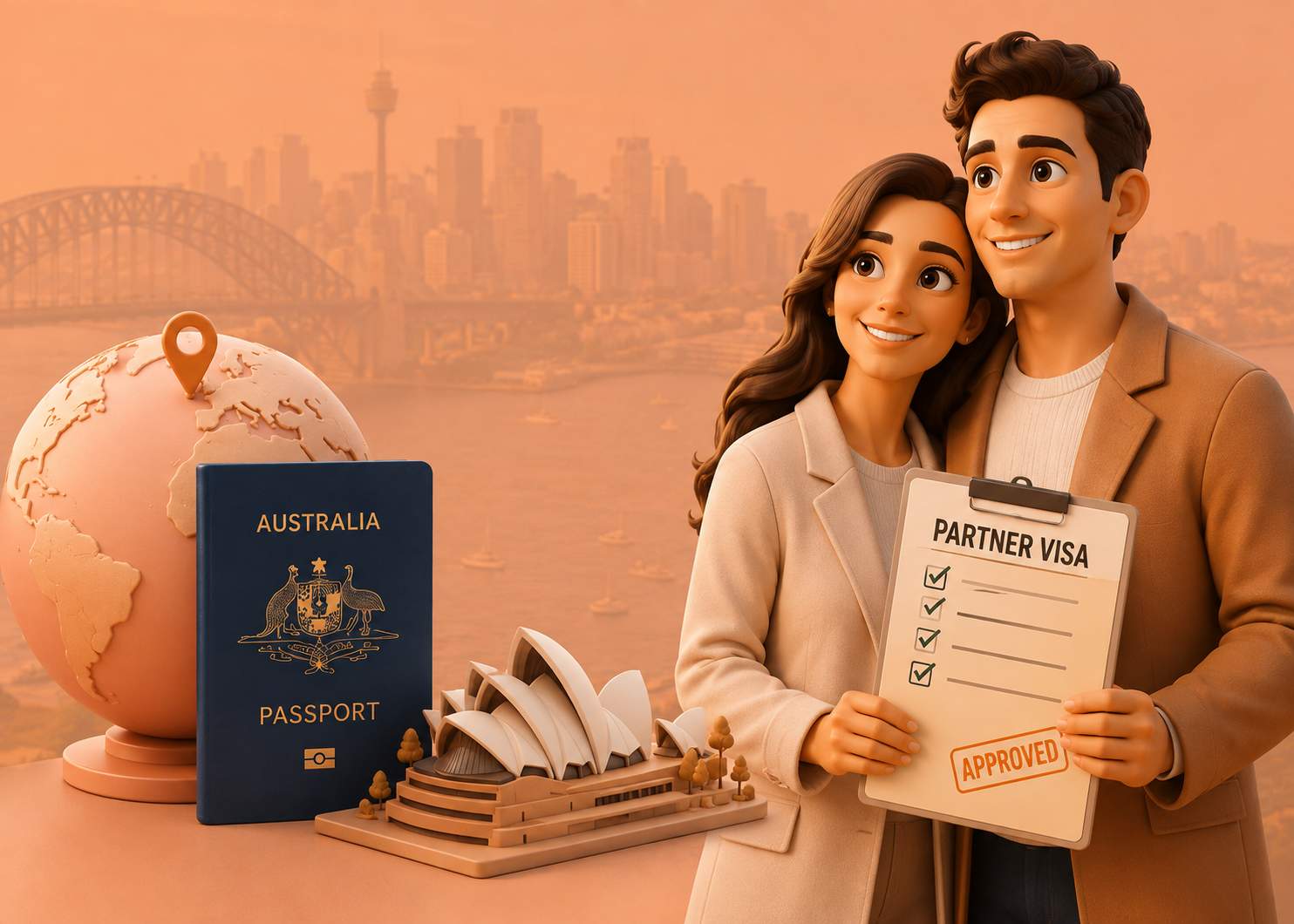
A Partner visa application can look straightforward until you reach the part where you have to confirm that your relationship is real. A marriage certificate alone rarely tells the whole story. Immigration officers want to know how you and your partner actually live, share responsibilities, spend time together and plan your future. That means your evidence needs to tell an ongoing story from diverse angles, rather than simply filling a document folder. Bank statements, travel records, photographs, rental agreements, messages, bills and statements from people who know you can all play a role. The challenge is knowing what matters, what is unnecessary and how to organise it. This Partner Visa Evidence Checklist Australia applicants can help you build evidence that is clear, relevant and easy to assess.
The Australian Department of Home Affairs expects applicants to deliver evidence that their relationship with their spouse or de facto partner is genuine and ongoing. The same documents needed can differ based on your circumstances and if you are applying for a temporary, provisional or permanent Partner visa. Australia has multiple Partner visa pathways like the onshore subclass 820 and 801 and offshore subclass 309 and 100. The subclass 820 and 309 are temporary or provisional stages while subclass 801 and 100 are the permanent stages.
Your application should therefore contain more than proof that you are married or living together. The Department may want to see how your relationship developed, how you manage your household and finances, your social life as a couple, your commitment to each other and your plans for the future. This is where strong Partner Visa Supporting Documents become important. Each document should have a purpose and should help demonstrate one or more parts of your relationship.
Start with the basics. Identity documents are essential before the department can properly assess your relationship evidence. Your documents may have your current passport, birth certificate, national identity card where applicable and evidence of any previous names. If there are any changes in your name because of marriage, divorce or another legal process, enclose the relevant name change documentation.
For an onshore subclass 820 application, Home Affairs specifically asks for the passport pages containing your photograph, personal details and passport issue and expiry information, along with birth or equivalent identity evidence. It is important that names and dates of birth are consistent throughout the application. If your passport, bank account, lease or marriage certificate contains different versions of your name, explain the difference rather than leaving the case officer to work it out.
If you are married, your official marriage certificate is among the most important documents in your application. It establishes the legal status of your marriage but it does not necessarily prove the entire relationship history. You should still provide other Australia partner visa evidence showing that your relationship is genuine and continuing.
If you have been previously married, divorced, widowed or permanently separated, the department expects information about previous relationships as well. Based on your circumstances, this can include a divorce certificate, death certificate, separation documents or statutory declarations. A common mistake is assuming that a marriage certificate is enough because the couple is legally married. Think of it as the starting point rather than the complete relationship case.
De facto applicants need to pay particularly close attention to their evidence because there may be no marriage certificate to establish the relationship. Your de facto relationship evidence for partner visa should demonstrate that you and your partner have built a genuine shared life. Useful records can include joint bank statements, joint bills, rental agreements, mortgage documents and evidence that you have lived at the same address. The department recognised evidence relating to financial arrangement, household arrangements, social activities and commitment between partners. Where relevant, registered relationships or evidence covering the needed period of the relationship may also be important. Do not rely on one type of document. A combination of financial, residential, social and personal evidence generally gives a much clearer picture.
Financial evidence can be among the strongest ways to demonstrate that a couple genuinely shares a life. Consider providing evidence such as joint bank account statements, joint savings, shared bills, joint loans, mortgage documents, insurance policies, household expenses and evidence of great purchases made together. You do not necessarily need to have every financial arrangement in both names. Many genuine couples keep some money separate. What matters is explaining how you actually manage your finances.
For example, if one partner pays rent while the other pays utilities and groceries, records showing this pattern may help demonstrate shared financial responsibility. The evidence should reflect your real circumstances rather than trying to create an artificial financial picture. This is an important part of the Partner Visa Checklist Australia applicants should prepare because financial arrangements form one of the major areas considered when assessing a relationship.
Living arrangements can provide useful evidence of a genuine relationship. Joint tenancy agreement, rental receipts, utility bills, council correspondence, insurance documents and official correspondence showing the same residential address can help establish that you share a home. However not every couple will have lived together continuously. Some partners may have spent periods apart because of work, study, family responsibilities or visa restrictions. If you have lived separately, explain the circumstances and deliver evidence showing how you kept the relationship during those periods. The Department specifically asks applicants to provide a written relationship history covering important events, periods spent apart and how the relationship developed.
A genuine relationship usually exists beyond back accounts and legal agreement. Photography with family and friends, invitations to weddings or other events, joint travel booking, holiday records, tickets, social events and evidence of shared activities can help show that your relationship is known to the people around you. The strongest social evidence usually has context. Ten photographs with dates, locations and a short explanation can be more useful than hundreds of random photographs with no information.
For example, explain that a photograph was taken at your partner's sibling's wedding, during a family holiday or at an important event you attended together. Home Affairs recognises joint social activities, common friends, travel together and evidence that the relationship has been disclosed to government, public or commercial organisations as possible relationship evidence.
Couples who live together may have plenty of everyday evidence but couples who have spent significant periods apart need to show how they maintained their relationship. Relevant records can include call logs, selected messages, emails, video-call records, travel bookings and evidence of visits. You do not need to submit every message you have exchanged since you started dating. In fact, a huge volume of repetitive screenshots can make an application harder to access. Choose representative evidence from different periods of the relationship. Make sure the dates help demonstrate continuity and that the material fits with the relationship history you provide. This can be particularly important for couples separated by international borders.
Your personal relationship statement is an opportunity to connect all the evidence. Explain how you met, when the relationship became serious, when you started living together if applicable, major events, trips, periods apart, engagement or marriage, involvement with each other's families and your future plans. Keep the statement factual and chronological.
Do not write an exaggerated love story. A precise account of your real relationship is generally more useful because the documents attached to the application should support the story. The Department particularly asks applicants to give information about how and when they met, how the relationship grew, when they moved in together, noteworthy events, periods spent apart and future plans.
Statements from people who know you as a couple can add another perspective. Family members, close friends or other people who have genuine knowledge of the relationship may provide statutory declarations and statements describing how they know you, how long they have known you together and what they have observed about your relationship.
These statements should be personal and specific. A generic sentence saying that you are a "happy couple" does not provide much information. A stronger statement might describe that the person came to your wedding, regularly visits your home, travelled with you or has observed your shared household and family life. Third party evidence should support, rather than replace your own documentary evidence.
Commitment is broader than simply saying you love each other. Evidence may include wills, beneficiary arrangements, emergency contacts, insource policies, evidence of supporting each other financially, shared responsibilities, future plans and documents showing knowledge of each other's personal and family circumstances.
The Department lists evidence concerning each partner's background, combined personal matters, wills and communication during periods apart among possible evidence of commitment. You do not need to manufacture documents simply to tick a box. If a particular document does not exist in your relationship, use other genuine evidence that demonstrates the same aspect of your commitment.
If you have children together, their documents can provide important evidence of your shared family life. Depending on the circumstances, this could include birth certificates, school records, medical or childcare documents, travel records and documents showing shared responsibility for the child.
If either partner has children from a previous relationship, provide the relevant relationship and custody documentation where required. The Department also expects information about dependants and previous relationships where applicable, so make sure the family history in your application is complete and consistent.
Relationship Evidence for Partner Visa is only one part of the application. Applicants may also need identity, character and other supporting documents depending on their circumstances. Police certificates can be relevant and Home Affairs notes that police certificates used for immigration purposes are generally valid for 12 months from the date of issue.
For the permanent stage, additional character documentation may be required. For example, Home Affairs states that applicants may need an Australian police certificate and overseas police certificates covering relevant periods after the temporary Partner visa was granted. Always check the document requirements attached to your specific application in ImmiAccount because requirements can differ between visa stages and individual circumstances.
Documents that are not in English need to be translated according to department requirements. Home affairs states that Australian translation should be completed by a translator accredited by the national accreditation authority for translators and interpreters. Translations completed outside Australia have different identification requirements for the translator. Documents should be scanned or photographed clearly and in colour. If a document has multiple pages, keep the pages together as one file.
Another practical point is organisation. Home Affairs advises applicants to clearly label documents and attach a document only once, even if it supports more than one part of the application. The current online process allows up to 100 documents for each person on the application.
A well-organised application is much easier to understand. Instead of uploading documents randomly, group them logically around the relationship areas. Keep financial evidence together, residential evidence together, social evidence together and communication evidence together. Use clear file names such as "Joint Bank Statements 2025–2026" or "Relationship Photos and Travel Evidence".
Create a simple timeline before uploading anything. Check that the dates in your relationship statement match the dates shown on leases, travel records, bank statements and photographs. This is one of the most useful steps in preparing a Partner Visa Evidence Checklist Australia application because inconsistencies are easier to spot before submission than after a case officer raises questions.
There is no universal number of documents that guarantees approval. Quality, consistency and relevance matter more than simply submitting a large collection of files. Ten different types of evidence covering several years can tell a stronger story than hundreds of screenshots from one month.
Your evidence should collectively address the main areas of your relationship: financial aspects, household arrangements, social aspects and commitment. The Department's guidance also supports using evidence across these different areas. The best Partner Visa Supporting Documents are therefore not necessarily the documents that look impressive. They are the documents that naturally prove how your relationship works in everyday life.
Before submitting, go through your documents one final time. Confirm that your identity information is correct, your marriage or de facto evidence is included where applicable, previous relationships are properly closed, financial and household evidence covers your circumstances, social evidence demonstrates that others recognise your relationship and your personal statements explain the relationship clearly. Also check the translations, police certificates, passport and supporting documents for dependents. Most importantly, make sure the evidence tells one consistent story.
The Partner Visa Australia Requirements are not about proving that your relationship looks perfect. They are about demonstrating that it is genuine, continuing and supported by real life evidence. If you are unsure whether your documents nicely cover your circumstances, professional guidance from a qualified Australian migration professional can help you identify gaps before submission. Immigration Buddy can also be considered as a source of further guidance but applicants should always check the latest requirements directly with the Department of Home Affairs before lodging an application.
Q. What documents are most important for an Australian Partner visa?
There is no single document that assures a successful application. Strong proof normally covers your identity, marriage or de facto relationship, finances, household arrangements, social life, communication and commitment. Your documents should collectively demonstrate that the relationship is genuine and continuing.
Q. How much evidence is required for a Partner visa?
There is no fixed number of documents that every applicant must provide. The right amount depends on your relationship and circumstances. A balanced collection of relevant documents covering different areas is generally more useful than submitting large amounts of repetitive material.
Q. Can I apply for a Partner visa without a joint bank account?
Yes. Not every genuine couple manages money through a joint account. You can provide other evidence of financial responsibility, such as shared bills, rent, mortgage payments, insurance, major purchases or other arrangements that accurately reflect how you manage your finances.
Q. What evidence can prove a de facto relationship?
De Facto Relationship Evidence for Partner Visa can include joint bank statements, shared bills, leases, mortgages, records showing a shared address, travel evidence, social evidence and documents demonstrating mutual commitment. Your evidence should reflect the actual way you and your partner have built your life together.
Q. Do I need to submit relationship evidence again for the permanent Partner visa?
The permanent stage can require additional information and documents. For subclass 820/801 and 309/100 pathways, the permanent stage is considered separately after the relevant eligibility period. Home Affairs advises applicants to provide further documents when requested and to use ImmiAccount for the permanent-stage application process.
study abroad and open doors to world class education, culture, and career opportunities! Your dream degree awaits overseas—take the leap today and shape a brighter tomorrow
.jpg)

 (1).png)
.jpg)
.jpg)
.png)
.png)
.png)

.png)


.png)
-compressed.jpg)
 (1).png)
.png)
 (1).png)
.png)



.png)
.png)



.jpg)
 (1).jpg)

 (1).jpg)
.jpg)
.jpg)
 (1).jpg)